
How to Heal Vocal Trauma Patterns
Release vocal blocks rooted in childhood and trauma.
You don't have to force it to reclaim it.
… nor do you have to dig up every old wound to heal. You just have to find a moment safe enough for your voice to stop bracing.
You've heard the word a thousand times. Safety. Create a safe space. Find safety in your body. Sing from a place of safety.
But what is it, actually? Not the concept, but the felt thing.
Safety is a physiological state - your nervous system reading the room, your relationships, the space inside your own chest, and deciding: can I open here, or do I need to brace and protect myself?
When the answer is brace and protect, your voice knows before you do.
The voice you had before the world got to it
Almost every client I work with started out loud.
Not trained, not polished - loud. As a kid, you probably sang in the car without checking who was listening. Asked questions when you didn’t understand something. Spoke the truth about things you witnessed that went against what you knew. Sang at full volume in your room with the door open, because it never occurred to you that anyone would mind.
Then, somewhere along the way, something shifted.
I've sat across from clients who can pinpoint it almost to the year - a household where there wasn't much room for big feelings or big sound, and somewhere around age six or seven, a child who used to talk and sing constantly went quiet. Sometimes it's slower than a single moment - an environment that rewarded smallness, that made being heard feel like a risk instead of a joy. The voice didn't disappear. It learned, very young, to stay contained.
Decades later, the body always still remembers the lesson it learned at seven: quiet is safer. So even as an adult, fully capable, the voice still needs someone - or something - outside itself to give it permission to come forward. It never learned to ignite on its own.
When the threat was real
I want to name something directly, because the wellness world tends to soften it: for many of the people I work with, silence wasn't an overreaction. It was necessary protection. And it worked.
Trauma isn't only the loud, dramatic kind. It's also the years of walking on eggshells around an unpredictable parent. The body that learned to go still and small during conflict, because stillness was safer than being noticed. The freeze response that kicked in during something no child should have had to survive - and that never fully released. The years of being talked over, dismissed, or punished for having needs, until having a voice at all started to feel like a liability.
All of that now lives in the breath. In the throat. In the chest that won't quite open, no matter how much air you pull in.
If you survived something - abuse, neglect, an unsafe household, a body that froze when it needed to and never got the chance to finish that response - your system didn't malfunction by going quiet. It did exactly what it needed to do to get you through. Staying small kept you safe. Holding your breath kept you undetected. Letting your voice go quiet may have kept you out of harm's way, more than once.
That protection made sense then. The work now is helping your nervous system learn, slowly, that the conditions have changed.
What threat does to a voice
Threat doesn't always look dramatic in the present moment. Sometimes it's a held breath before a high note. A throat that tightens the second you're asked to be seen. A voice that can do speak or sing clearly in your own comfort zone, but then disappears the moment it matters - on stage, in a meeting, in front of the person you love.
A nervous system that has learned, somewhere along the way, that sound is dangerous will protect you from making sound. That being heard costs something. That taking up that much space invites a consequence.
So the body does what bodies do - it protects you. It clamps the throat, shallows the breath, pulls the volume down before you've even decided to speak. Old intelligence, still running the program it learned when it needed to.
When you can't find safety
Sometimes you can't access safety. Your system genuinely doesn't have a reference point for it yet - or the moment you're in doesn't actually offer it.
Forcing your way into "safe" when your body has no felt memory of what that is tends to backfire. It becomes another demand. Another thing to fail at. Another reason to brace harder.
So many well-meaning approaches ask you to manufacture a state you don't have access to - and when it doesn't come, you decide something is wrong with you.
Nothing is wrong with you. The state of felt safety was never built, or it was taken from you early, before you had words for what was happening.
The shift: stop forcing safety, start finding "less"
Here's the reframe that actually moves the needle: stop looking for safe. Start looking for less.
Less threatening. Less alert. Less braced than the rest of your day.
You don't need a sanctuary. You need a moment that asks slightly less of your guard than the last one did. A room. A person. A song. A time of day. The five minutes after your coffee and before your inbox. The drive home, alone, windows down.
Notice where your throat is already a little less tight. Where your breath already drops a little lower without you forcing it. That's data. That's a doorway.
This is the beginning of healing at work: you build by following what's already, even slightly, more alive - not by diving into the threat and excavating it.
Capacity, not courage
This work doesn't ask you to be brave enough to sing or speak through fear. It asks you to build real capacity, in doses small enough that your body can actually integrate them - instead of overriding the alarm and calling it progress.
A voice that's allowed to find its own pace toward sound finds its way there because the conditions finally allow it.
The work is finding the moments that are less - and letting the voice that was always in there meet you partway.
Where to start
You don't need to overhaul your life or book a $4000 retreat to begin. Start smaller than that.
Today, notice one moment where your guard is already slightly lower than usual - and hum, just once, into that moment. Not a song. Not a performance. One low, easy hum, in the place where your body is already a little less braced.
That's the first rep. Finding safety in the smallest dose your nervous system can actually start to believe.
Ready To Begin?
If this post has named something you've been carrying for a long time, I created something specifically for you.
Voice Medicine is a free guide — 5 tools to help you manage stress and anxiety using the power of your own voice. Body-based, trauma-educated, and designed as a gentle first step into this work.
Click the button below to download Voice Medicine for free.
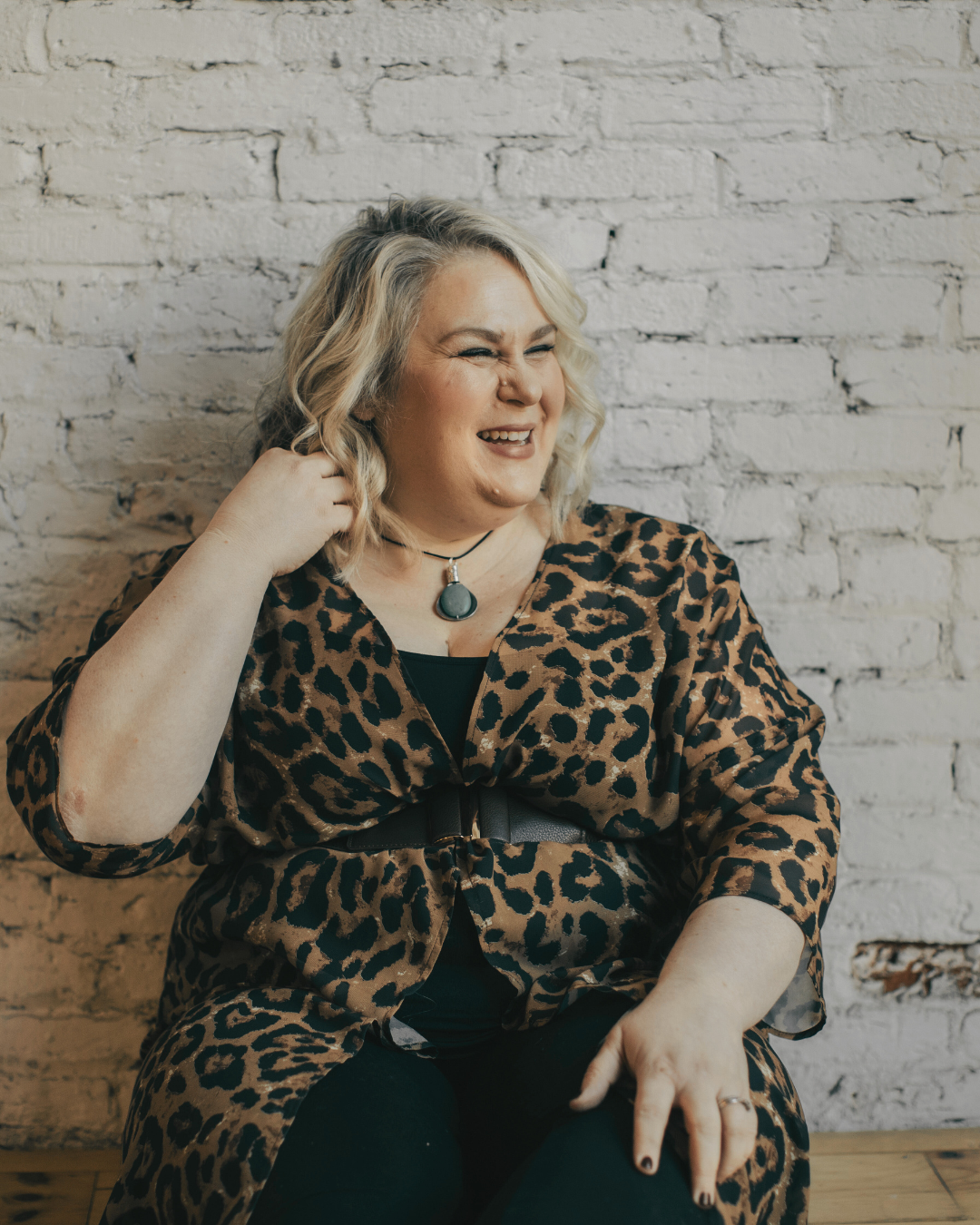
✢ I'm Elise Besler , Somatic Voice Liberation Coach, Somatic Experiencing™ Practitioner, Vocalist and Sound Healer
Your voice has a story. And you get to decide how it ends.
I help people healing their relationship with their voice so they can sing, speak and be seen without shrinking themselves. My work sits at the intersection of Voice, Trauma Healing, and Creative Expression. This is where that journey begins. I’m so glad you’ve found your way in!
Xo, Elise
Featured posts



You don't have to force it to find it.
Nor do you have to dig up every old wound to heal. You just have to find a moment safe enough for your voice to stop bracing.