
What We Get Wrong About "Releasing" Trauma
(And What That Viral LeAnn Rimes' Jaw Release Video Actually Taught Us)
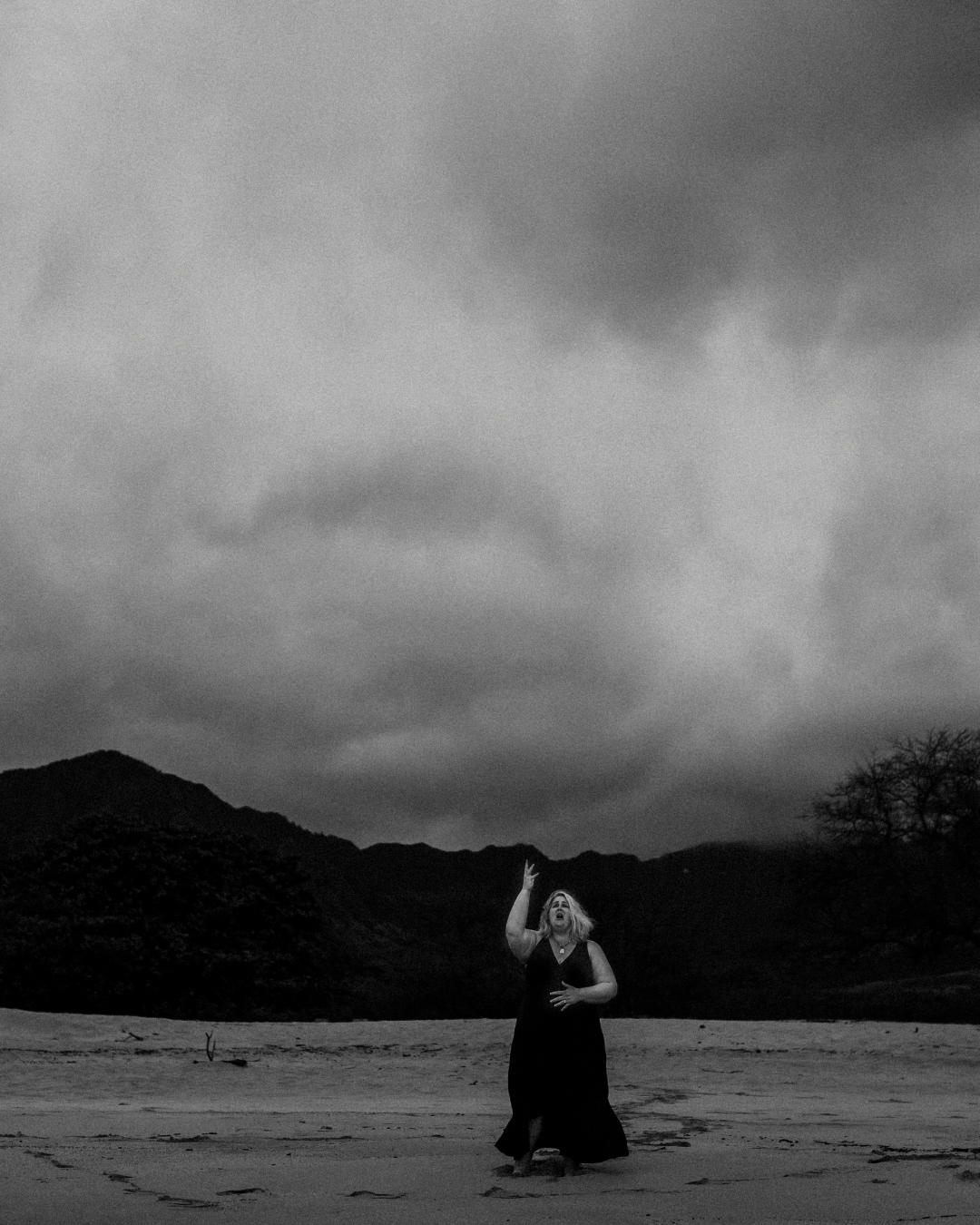
The viral jaw release LeAnn Rimes video broke my heart a little. Not because of what she experienced — but because of what we all wanted it to mean.
This is the most important thing I've written in a while. I hope it lands for you.
I watched the video three times.
If you haven't seen it yet — LeAnn Rimes, lying on a table, a practitioner's hands working deep into her jaw. And then, suddenly, this flood. Sobbing. That particular kind of crying where no sound comes out. The kind that comes from somewhere older than language.
I felt it in my own body watching it. I think most people did.
And I understand completely why it went viral. A woman finally letting go — after years of holding, bracing, white-knuckling her way through chronic pain, dental surgeries, performances, a public life — finally, visibly, coming undone in the best possible way?
That's everything.
So I want to be clear before I say anything else: what happened in that video was real. And LeAnn Rimes deserves to have her experience honoured, not picked apart.
I also work with bodies and nervous systems every day. And what I saw in that video — and more importantly, what I saw in the response to that video — tells me we need to talk.
What You Actually Saw
The caption on the original post described it as trauma "releasing." The jaw, they explained, is one of the body's primary storage sites for stress. By working the fascia, they could "signal safety to the nervous system" and allow "stored energy to move."
There's truth in there. The jaw does hold an enormous amount of tension. The fascia does respond to our lived experience. And physical touch, when attuned and skilled, absolutely can create shifts in the nervous system.
But what you saw in that video wasn't trauma releasing.
What you saw was a nervous system discharge.
Here's the distinction, and it matters: when the body is holding chronic tension — the kind that's been there for years, maybe decades — and something suddenly creates an opening, the nervous system can flood. All that activation that's been carefully managed, contained, tucked away — it finds an exit. And it moves fast, and it moves big, and it can feel extraordinary.
That flooding, that sobbing, that relief of saying "oh my God I didn't know how much I was carrying" — that's real. It's not performance. It's not manufactured.
But it isn't the same as healing.
Trauma Doesn't Live in Your Jaw Like a File You Can Delete
This is the part we really need to sit with.
Trauma isn't a thing. It's not a substance stored in your tissues, waiting to be pressed out like a knot in a muscle. It's not energy trapped in your fascia that, once released, is simply... gone.
Trauma is a pattern. It's the way your nervous system learned to respond to threat — to brace, to guard, to clench, to disappear, to perform — in order to keep you safe. Those patterns live in your body, yes. But they're not deposits. They're habits. Deeply grooved, often unconscious, profoundly protective habits that your system developed, probably long before you had words for what was happening to you.
None of us can delete a trauma pattern in 60 seconds.
What we can do — what skilled somatic work genuinely does — is introduce enough safety, enough presence, enough relationship, that the pattern starts to have less reason to hold on so tight. Slowly. Over time. In doses the nervous system can actually integrate.
That's a very different thing from a jaw release. And it's a much slower, quieter, less shareable thing.
The Part Nobody Is Talking About: Recoiling
Here's what concerns me most about the viral moment, and about the way people are responding to it.
When a nervous system that has been holding — really holding, for a long time — is suddenly asked to open all the way, without enough pacing, without enough titration, it will protect itself in a big way.
It will slam the door shut.
This is called recoiling. And it's not failure. It's the system doing exactly what it was designed to do: keeping you safe from overwhelm.
But the aftermath of recoiling can be brutal. You can end up more dysregulated than you were before. More defended. More exhausted. Sometimes more dissociated. The window that cracked open slams shut, and now it feels harder to get back to even.
I've seen this happen. I've felt versions of it in my own body. And I see it regularly in the people I work with — the ones who sought out the big, dramatic release, and found themselves worse off afterward, wondering what they did wrong.
They didn't do anything wrong, by the way. Their nervous system just needed more time than it was given.
The Before-and-After Myth
We are wired for the transformation moment.
The sob. The laughter. The "I didn't even know I was carrying that." The face that looks visibly lighter, more open, more free. The practitioner saying "say that part of your life is over" and the client, tearfully, believing it.
It looks like a finish line. It feels like an ending. We share it, we celebrate it, we crave it for ourselves.
In somatic work, we call that a starting line.
It's the body saying — for maybe the first time — okay. Maybe it's safe to begin. And that is genuinely, profoundly meaningful. But what comes after that moment is where the actual work lives.
The integration. The wobble. The day when the old pattern comes back and you're disappointed, because you thought you'd released it. The slow, unglamorous accumulation of moments where your nervous system learns — really learns, at a cellular level — that safety is possible. That you can be here, in this body, without bracing for what comes next.
That work is quiet. It's not shareable. It doesn't go viral.
And it changes everything.
What The Body Actually Needs
If you're someone who's been carrying tension in your jaw, your throat, your shoulders, your chest — and I know many of you are — here's what I want you to know.
Your nervous system needs small, tolerable doses of activation and release — not the whole flood at once. Think of it like building a muscle. You don't start with the heaviest weight in the room.
In Somatic Experiencing™, we talk about pendulation — the movement between activation and ease, between the charged place and the resource. You don't go through the difficult material all at once. You touch it, and you come back. Touch it, come back. Each time, the window gets a little wider.
A gradually expanding window of tolerance isn't built in a session. It's built over months, sometimes years, of consistent, paced, relational work. This is not a flaw in the process. This is the process.
The nervous system heals in relationship. Not just with a practitioner, but with yourself. With your own body. Learning to be curious about your sensations instead of afraid of them. Learning to notice the brace before it becomes a flood. Learning to be, as I often say, the source of safety for yourself — rather than always seeking it at the hands of others.
A Note on LeAnn — and on All of Us
I want to come back to her for a moment, because I mean this with genuine warmth.
LeAnn Rimes has had a hard road in her body. Twenty-nine dental surgeries. Chronic pain. A public life that began when she was barely a child. Of course she's been bracing. Of course her jaw has been holding on for dear life.
And whatever she experienced on that table — the relief, the opening, the tears — I believe it was real for her. I hope it's part of a longer journey of care that includes the slower, relational work too.
What I take issue with isn't her experience. It's the framing. The "stored energy moving." The "you can see the exact moment the tension breaks and the emotional weight lifts." The implicit promise that this is what healing looks like — dramatic, visible, transformational, over.
Because for most of us, healing doesn't look like that. It looks like showing up again. And again. And slowly, quietly, learning to trust the body that's been working so hard to protect you.
An Invitation
If your body has been bracing — if your jaw is tight, your throat is constricted, your voice feels like it's living somewhere smaller than you — I want you to know that you don't have to blow the whole thing open to begin.
You just have to begin.
Slowly. Gently. In relationship with someone who knows how to pace this with you. And increasingly, in relationship with yourself.
Your body isn't holding back. It's holding on. To the only strategies it knew, at a time when it needed them.
It deserves more than a moment.
It deserves a practice.
Ready To Begin?
If this post has named something you've been carrying for a long time, I created something specifically for you.
Voice Medicine is a free guide — 5 tools to help you manage stress and anxiety using the power of your own voice. Body-based, trauma-educated, and designed as a gentle first step into this work.
Click the button below to download Voice Medicine for free.

✢ I'm Elise Besler , Somatic Voice Liberation Coach, Somatic Experiencing™ Practitioner, Vocalist and Sound Healer
Your voice has a story. And you get to decide how it ends.
I work with singers, speakers, and anyone who's ever been told their voice was too much, not enough, or simply unwelcome — helping them come back to themselves through body-based, trauma-educated, nervous system work. This is where that journey begins. I’m so glad you’ve found your way in!
Xo, Elise
Featured posts



You don't have to force it to find it.
Nor do you have to dig up every old wound to heal. You just have to find a moment safe enough for your voice to stop bracing.